
Click here to access this dispatch as a formatted PDF.
In a recent article, Bloomberg’s Abhishek Vishnoi argues that “India Missed Out on AI and Now Its Run as Market Darling May Be Over”, contrasting Indian indices’ underwhelming recent performance to the manic “AI-driven” rallies sweeping other Asian markets – in particular Taiwan and South Korea – to record highs. This perspective is echoed by other financial media talking heads, who warn that India will be unable to “win AI” as long as it underspends on cutting-edge R&D, “remains a consumer of AI rather than a global leader in its development”, and “lacks a home-grown Nvidia, TSMC, OpenAI or SK Hynix equivalent.”
India is a beneficiary of AI, not a victim
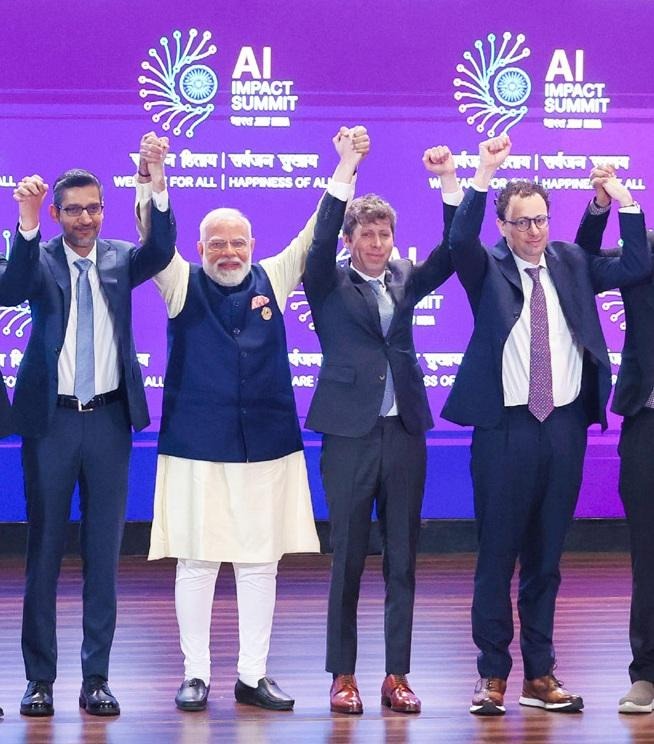

When it comes to economic impact, adoption > invention
We believe India will reap disproportionate rewards from the adoption of AI. Its enormous domestic market, youthful digital-native citizenry, vast troves of data, ubiquitous low-cost mobile broadband, robust digital infrastructure, and AI-supportive government make India fertile ground for innovators eager to apply AI not only to software development and enterprise productivity, but also to real-world challenges in less crowded sectors such as education, healthcare, and rural finance. Even as it leads the race to develop novel AI use cases, India is also benefiting from its ability to deploy AI systems in lieu of older, less-efficient IT technologies – much as it was able to leapfrog fixed-line telecommunications in recent decades in favor of cheap, high-bandwidth cellular networks.
The core premise underlying the enormous sums being invested into AI is that this emergent technology will eventually underpin the provision of commensurately valuable services to enterprises and consumers. We can argue over how that value will ultimately be divided among providers of data centers/other cloud infrastructure, suppliers of chips/other hardware going into those data centers, developers of applications/services running on that hardware, and end-users of those services. Ultimately, however, the hundreds of billions or even trillions of dollars in revenue that AI bulls expect to flow “up the funnel” to application developers, hardware suppliers, and infrastructure providers will need to originate from enterprise and consumer users of AI services who feel they are capturing economic benefits significant enough to justify paying those vast sums.
Furthermore, the history of transformative inventions suggests that the countries that benefit most from new technologies are not necessarily those that develop them first, but rather those that deploy them most widely. Originally European inventions such as the steam engine, railroad, automobile, and jet engine ultimately revolutionized the American economy. Originally American inventions such as utility-scale wind turbines and solar photovoltaics ultimately fostered Chinese green energy dominance. Similarly, we believe AI will create the most value not where the most expensive R&D occurs, but rather where it is most energetically infused into the real-world economy.
India is actively infusing AI into its economy
Belying critics, India is embedding AI into citizens’ lives more energetically than most Western economies, setting the stage for further acceleration in the world-leading growth of an economy underpinned by youthful demographics, accelerating urbanization, savings financialization, world-class digital infrastructure, and a thriving ecosystem comprising many of the world’s brightest tech minds, scrappiest entrepreneurs, and most innovative AI startups.
In our view, the “India won’t win AI” perspective overlooks key advantages inherent to the world’s most populous nation and fastest-growing major economy. While many Westerners (including a majority of Americans) are skeptical about AI, large majorities of Indians believe the technology’s benefits outweigh its risks. According to a 2025 Boston Consulting Group report, 92% of Indian office workers use AI regularly at work – compared to just 64% of Americans. India is the world’s biggest market by daily users for OpenAI’s ChatGPT and Anthropic’s Claude, as well as for communication and media platforms relevant to AI services deployment including Instagram, WhatsApp, and YouTube.
India’s roughly 1 billion-strong internet userbase represents global AI companies’ largest addressable market (while China has even more web users, it is effectively closed to Western tech firms). India’s vast internet userbase is extremely linguistically and socioeconomically diverse – making it “an ideal ‘testing ground’ for new products, and for observing usage at scale.” As a result, India is leading the race to develop new ways of making productive use of chatbots, coding assistants, automation tools, and other functional deployments of the technology.
Among these novel use cases is faster, more effective workforce training – which, in turn, is helping multinationals accelerate the shift to their Indian global capability centers (GCCs) of increasingly complex, high-value work, from marketing and cybersecurity to the oversight of multinational tech giants’ cutting-edge AI agents. India’s enthusiastic uptake of AI extends well beyond Bengaluru’s office parks to industries including Bollywood, where studios are energetically deploying AI tools for everything from multilingual dubbing to the creation of full-fledged movies.
India’s AI ecosystem is flourishing
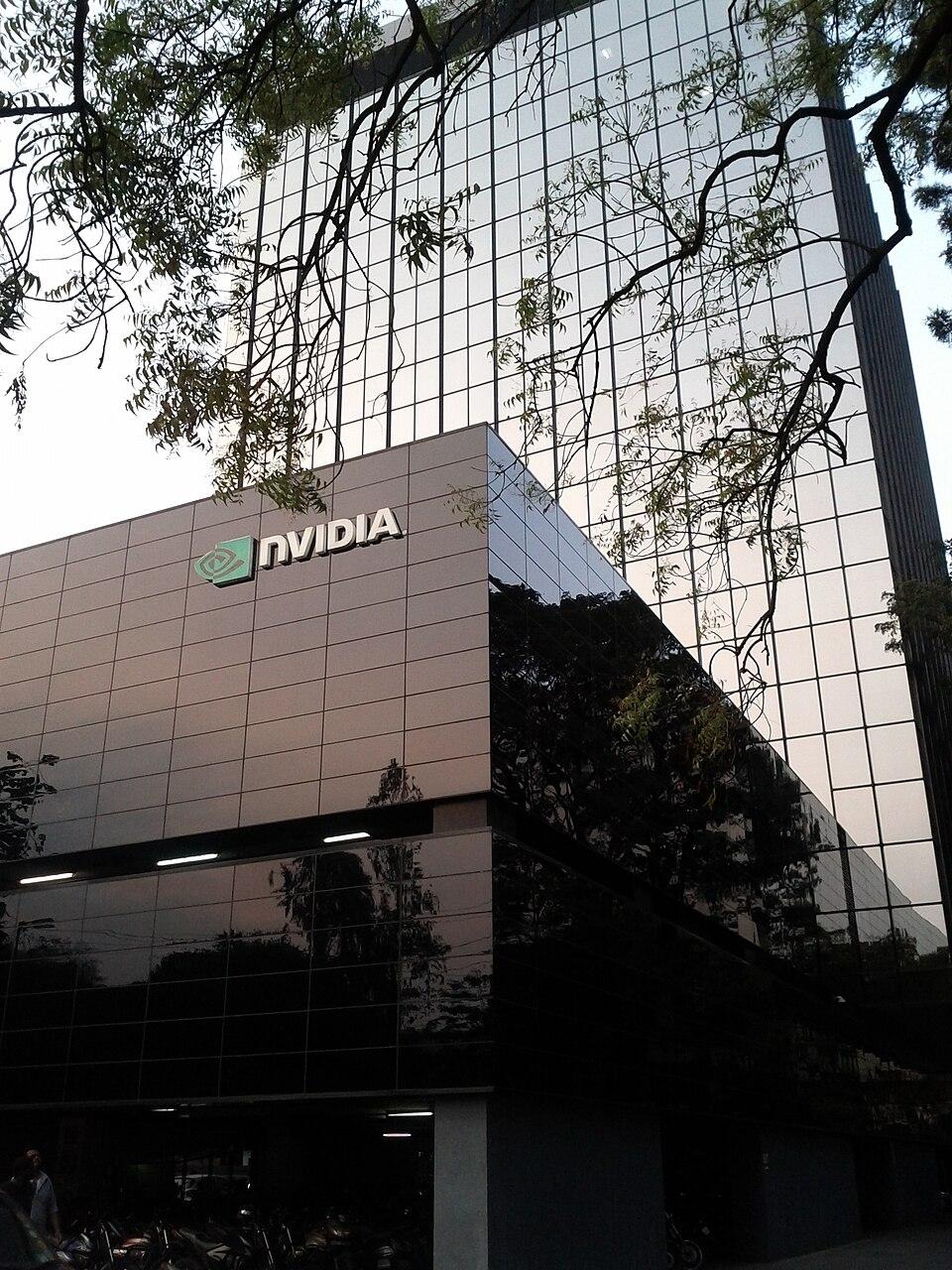

India’s data center boom
India’s flourishing AI ecosystem is supported by the IndiaAI Mission, a ₹103 billion (≈$1.1 billion) government-funded initiative aimed at nurturing Indian AI startups, supporting homegrown models, and promoting private investment in computing resources. Prime Minister Narendra Modi’s government reportedly plans to unveil an additional ₹1 trillion (≈$10.5 billion) fund focused on domestic chipmaking.
This effort has helped catalyze hundreds of billions of dollars’ worth of investment into AI-related infrastructure in India from American and Indian tech giants. These include Reliance Industries (NSE: RELIANCE – $110 billion committed, with Meta already signed up as a customer), Adani Enterprises (NSE: ADANIENT – $100 billion), Amazon (NASDAQ: AMZN – $35 billion), Microsoft (NASDAQ: MSFT – $17.5 billion), Google (NASDAQ: GOOG – $15 billion), Tata Consultancy Services (NSE: TCS – $7 billion, with OpenAI already signed up as a customer, and more such deals reportedly in the works), and Bharti Airtel (NSE: BHARTIARTL – $1 billion committed in conjunction with three U.S. private equity firms). In addition, Nvidia (NASDAQ: NVDA) is energetically building and expanding partnerships with Indian AI startups, venture capital firms, and data center builders.
As a result, India’s data center capacity is expected to surge nearly sixfold (from ~1.8 to ~10.5 gigawatts) by the end of this decade. Multinational suppliers of AI-related hardware increasingly view India not only as a booming source of demand, but also a manufacturing hub – as evidenced by the surging order books of India-based companies such as ABB India (NSE: ABB), Hitachi Energy India (NSE: POWERINDIA), Schneider Electric Infrastructure (NSE: SCHNEIDER), Sterlite Technologies (NSE: STLTECH), and MTAR Technologies (NSE: MTARTECH).
India’s thriving startup scene
With over 31,000 tech startups, India has rapidly emerged as the world’s third-largest hub for startups after the U.S. and China. Indian AI startups raised $1.62 billion across 227 deals in 2025, up +71% from $946 million across 194 deals in 2024. Year-to-date through May 2026, Indian AI startups raised $725 million across 113 deals, suggesting continued strong momentum. India bears point out that these figures are rounding errors relative to the $65 billion poured into the latest (Series H) Anthropic funding round alone, and warn that Indian startups’ focus “on creating AI applications rather than foundational AI models” implies limited benefits for their investors and the broader Indian economy.
We believe these bearish perspectives miss the point. Rather than compete head-on with the American AI titans, Indian startups are building models and services at a fraction of the cost of the latest OpenAI, Anthropic, or Google releases that provide “95% to 99%” of those cutting-edge systems’ capabilities – enough to tutor a child in Tamil, chat with a kirana-shop owner in Marathi, draft a legal contract in Hindi, run a customer-service line in Gujarati, or explain a radiology scan in Bengali. Arguably foremost among India’s rising AI stars is Sarvam AI, founded in 2023 by Vivek Raghavan (who oversaw the build-out of India’s Aadhaar biometric digital identity system) and Pratyush Kumar (who helped launch the AI4Bharat open-source initiative) with a focus on developing AI services tailored to India’s vast linguistic and cultural diversity.
The so-called India Stack consisting of India’s Aadhaar biometric ID system, world-leading UPI (Unified Payments Interface) real-time digital payments network, and other inter-operable government-backed application programming interfaces served as the foundation for the nation’s thriving ecosystem of mobile-native identity, financial, and data services. Similarly, the budding ecosystem of AI systems developed by and for Indians renders moot the argument we frequently see online about how “India has missed the Gen-AI bus” (specifically, because said bus has long since left the station in Silicon Valley and Hangzhou). Thanks to its immense market, vast pool of engineering talent, and scrappy entrepreneurial culture, India is riding a world-class, indigenously-developed vehicle of its own.
AI “FOMO” is not an investment strategy
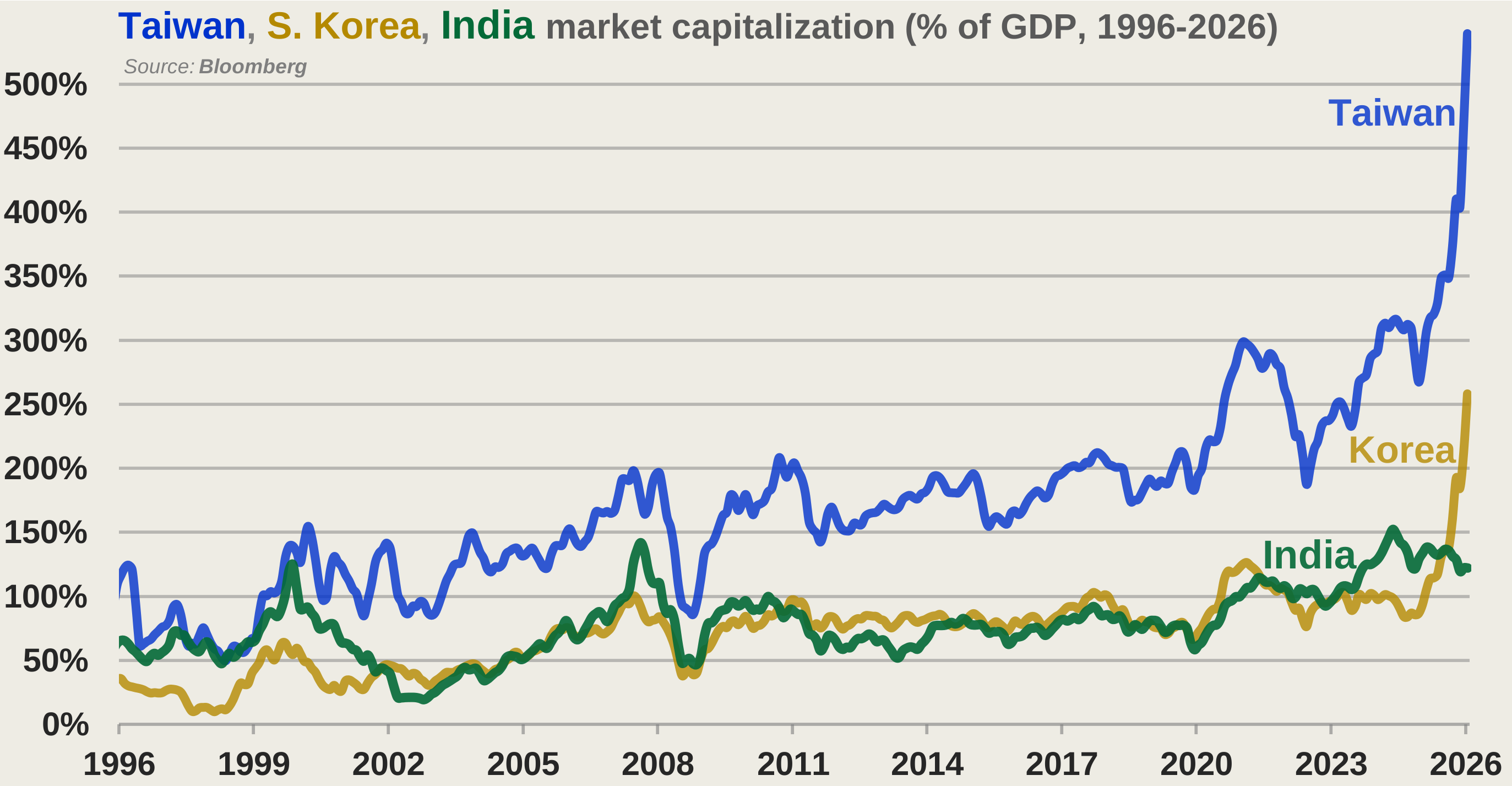
Rival Asian markets’ AI-driven rallies are precarious
In his recent Bloomberg piece, Abhishek Vishnoi writes that “[w]hile India has talent, demand and digital scale, few of its corporate champions are directly linked to that buildout. That increasingly leaves the market tied to the domestic consumption story.” With all due respect to Singapore-based Vishnoi, we believe India’s consumer market – the world’s fastest-growing – should over the long term serve as a drastically more durable and reliable driver of equity returns than the unsettlingly concentrated export surge underpinning the frenzied, fear of missing out (“FOMO”)-driven rallies in Taiwanese and Korean semiconductor stocks.
Year-to-date through June 12, 2026, the MSCI Taiwan index has gained more than +55%, while the MSCI Korea index has soared nearly +110%. Both countries’ surging equities have been driven by a handful of firms’ booming exports of semiconductors to a highly concentrated set of mainly American and Chinese customers. This risky reliance on suddenly spiking external demand is illustrated by skyrocketing ratios of equity market capitalization to GDP, which in both countries have spiraled to historically unprecedented levels (see chart above).
The success of Taiwanese and Korean chipmakers has coincided with stagnation in both countries’ production of cars, chemicals, machinery, and other non-semiconductor-related goods. As a result of this divergence, chips and other AI-related equipment now account for more than 40% of South Korea’s overall exports, and 80% of Taiwan’s. The share of GDP attributable to private consumption, meanwhile, is below 50% and declining in both economies.
Both economies’ overall growth is now almost completely reliant on continued growth in their exports of a narrow set of AI-related goods to a small set of customers. By the same token, both economies’ equity indices are now overwhelmingly driven by a tiny elite of politically-influential export behemoths. Just two firms – Samsung Electronics (KRX: 005930) and SK Hynix (KRX: 000660) – account for more than half of the MSCI South Korea index, while contract chipmaker Taiwan Semiconductor Manufacturing Co. (a.k.a. TSMC – NYSE: TSM) alone accounts for more than half of the MSCI Taiwan index (which now trades at a higher multiple of earnings than India’s benchmark Sensex index).
Investors in Taiwanese and South Korean indices are implicitly betting against the prospect of a slowdown in the (historically highly cyclical) semiconductor industry caused by a pullback in the eye-watering capital expenditure plans of “hyperscalers” such as Amazon (NASDAQ: AMZN), Alphabet (NASDAQ: GOOG), and Microsoft (NASDAQ: MSFT), the development of more resource-efficient AI models, disruptions to supplies of imported input materials essential to chip manufacturing, or even a more run-of-the-mill, credit crunch-induced developed-world recession.1
1. Investors in Taiwanese equities are also making an implicit bet on the sustainability of the world’s most bloated current account surplus and the stability of its most drastically undervalued currency.
India’s market is diversified and domestic consumer-driven
In our view, India’s highly diversified, domestic consumer-driven economy should be able to sustain a world-leading GDP growth rate through any of the above macroeconomic scenarios. No single firm accounts for more than ~6% of the MSCI India index, and the share of GDP attributable to private consumption is close to 60% – nearly 20 percentage points higher than in Taiwan.
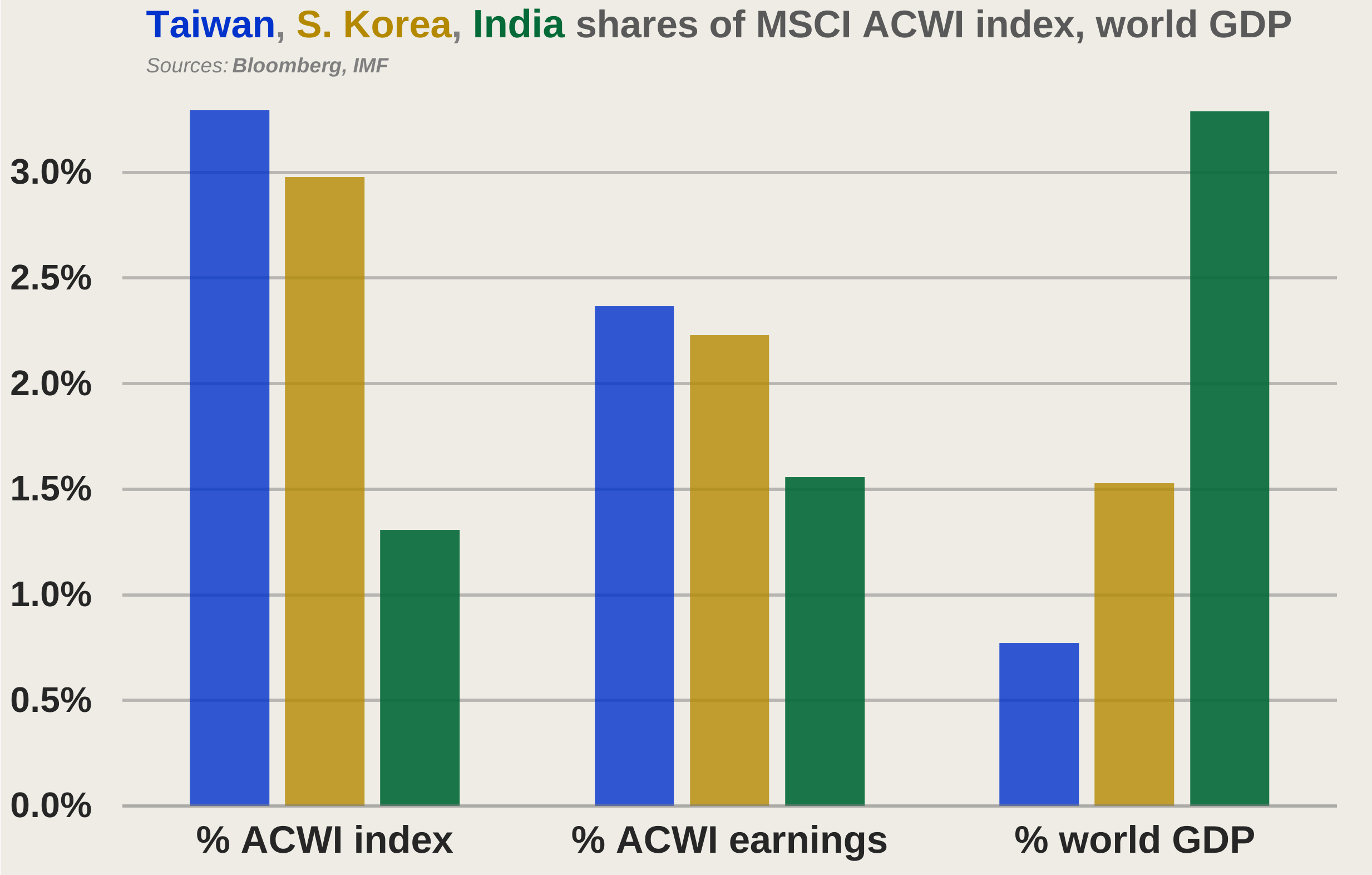
Taiwanese and Korean firms’ weightings in the MSCI All Country World Index (ACWI) outpace their shares of that index’s underlying earnings, and far eclipse their shares of nominal world GDP. By contrast, Indian firms’ current ~1.3% weighting in the ACWI substantially trails those companies’ ~1.6% share of ACWI earnings, and is equal to just a fraction of India’s ~3.3% share of global GDP.2
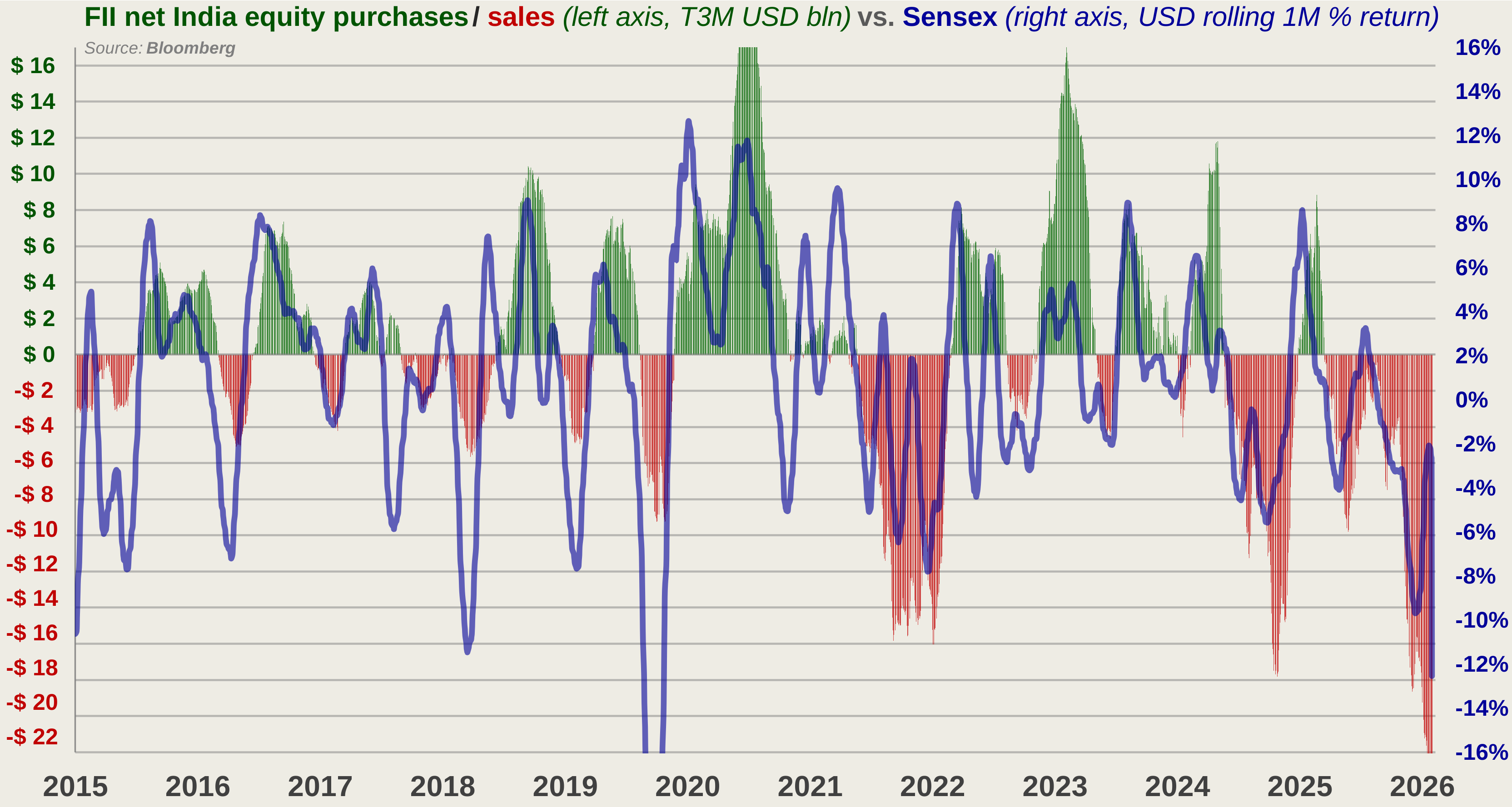
Foreign institutional investors’ ownership of Indian equities has sunk to a 14-year low, but the historical record shows that foreigners are terrible at timing the Indian market – pouring funds in at cyclical peaks only to rapidly pull capital out during downswings (see chart below). Meanwhile, the Indian stock market has been buttressed by resilient domestic buying. Buoyed by 401(k)-style payroll deduction-funded systematic investment plans (SIPs), domestic Indian mutual funds now hold nearly 20% of their home market. In our view, long term-minded foreign institutional investors would be wise to ask why Indians themselves have remained enthusiastic buyers of the high-quality, earnings-compounding Indian businesses whose shares foreigners have been dumping at a record pace while chasing increasingly frothy rallies in Korean, Taiwanese, and U.S. semiconductor stocks.
2. Per a June 2026 analysis of Bloomberg and IMF data.
Indian equities: unparalleled long-term opportunity
AI adoption will accelerate India’s world-leading growth
India’s world-leading growth engine is underpinned by the nation’s youthful demographics, accelerating urbanization, innovative digital infrastructure, and prudent macroeconomic governance. These durable, resilient drivers are being further complemented by the financialization of Indian households' savings, record public investment in transport and logistics, an ongoing boom in exports as India emerges as a supply chain hub for multinationals diversifying away from China, and rapid growth in the number of increasingly well-paid jobs at multinationals’ Indian global capability centers (GCCs).
As it embeds AI into its winning development strategy, India is likely to mitigate its chronic shortages of teachers and doctors, make it commercially viable to provide hundreds of millions of people and small businesses with access to high-quality education, healthcare, legal, financial, and other services, and hasten hundreds of millions of consumers’ ascent into the middle class. By streamlining digital payment adoption, tax compliance, and the integration of informal workers into regulated “gig economy” platforms, AI is also likely to expedite the ongoing shift of Indian economic activity away from low-productivity “unorganized” enterprises toward organized, listed firms with greater scale, superior access to capital, and drastically improved capacity for deploying productivity-boosting AI technologies.
Gymkhana’s portfolio companies will be prime beneficiaries
As we have written over the years, we believe the greatest investment opportunities among India’s >5,000 listed companies tend to be overlooked mid- and small-capitalization stocks, as opposed to the 50-100 large-caps that account for a majority of most other India-dedicated funds’ capital.3 Gymkhana is exposed to just one of those large-caps, OpenAI’s Indian partner Tata Consultancy Services (NSE: TCS) – and even then only indirectly, via our investment in Tata Chemicals (NSE: TATACHEM), whose current ~$2 billion market capitalization is significantly less than the likely value of TATACHEM's ~2.5% stake in Tata Sons, the unlisted holding company that owns a ~71.7% controlling stake in TCS.
Gymkhana’s portfolio includes an array of smaller-cap firms benefiting directly from AI-related data center capital expenditures, such as electrical equipment manufacturer Bharat Bijlee (NSE: BBL), networking solutions provider D-Link India (NSE: DLINKINDIA), and ozone-friendly refrigerant chemicals supplier SRF (NSE: SRF).4 Other portfolio holdings such as Gala Precision Engineering (NSE: GALAPREC) and Azad Engineering (NSE: AZAD) supply critical components to global electrical infrastructure/industrial automation giants including ABB (SWX: ABBN), GE Vernova (NYSE: GEV), and Schneider Electric (EPA: SU).
We believe the biggest AI winners within India’s vast universe of listed companies will not be “first-order” beneficiaries such as data center operators, electrical equipment manufacturers, and cloud infrastructure providers. Rather, they will be “second-order” beneficiaries that do not themselves build AI systems, but utilize the technology to shorten product development timelines, optimize supply chains, streamline regulatory compliance, et cetera. In the longer term, we expect that the embedding of AI into India’s economy will drive even broader “third-order” gains by speeding up improvements in agricultural productivity, hastening the shift of workers toward larger, formal-sector firms, accelerating the financialization of household savings, and expanding the number of creditworthy, growing enterprises capable of productively investing those savings.
Gymkhana portfolio holdings we believe to be such second- and/or third-order AI beneficiaries include financial services providers Bajaj Finance (NSE: BAJFINANCE) and Chola. Investment and Finance (NSE: CHOLAFIN),5 mutual fund distributor Prudent Corporate Advisory Services (NSE: PRUDENT), crop care specialists Dharmaj Group Guard (NSE: DHARMAJ) and Dhanuka Agritech (NSE: DHANUKA), active pharmaceutical ingredients manufacturer Supriya Lifescience (NSE: SUPRIYA), and employer-sponsored health benefit plan administrator Medi Assist (NSE: MEDIASSIST).
Following Indian equities’ recent underperformance relative to other Asian markets, Indian companies’ share of global equity indices is now substantially below their share of those indices’ underlying earnings, while foreign holdings of Indian equities have sunk to a 14-year low. With AI adoption set to accelerate the earnings compounding that has historically underpinned Indian equities’ robust long-term returns, we believe today represents an opportune entry point for long-term-minded investors seeking to participate in India’s powerful growth trajectory.
* * *
Andrei Stetsenko
June 15, 2026
3. Per a June 2026 analysis of the most recently-reported holdings of the 56 funds listed in Appendix E of Gymkhana’s latest marketing presentation.
4. Gymkhana owns SRF indirectly via listed holding company KAMA Holdings (NSE: KAMAHOLD).
5. Gymkhana owns BAJFINANCE and CHOLAFIN indirectly via listed holdcos Maharashtra Scooters (NSE: MAHSCOOTER) and Cholamandalam Financial Holdings (NSE: CHOLAHLDNG).
Legal information and disclosures
The views expressed are the views of the author as of the date indicated on each posting; such views are subject to change without notice. Farley Capital L.P. (Farley Capital)has no duty or obligation to update the information contained herein. Further, Farley Capital makes no representation, and it should not be assumed, that past investment performance is an indication of future results. Any discussion regarding investment returns or financial projections are provided as illustrative examples only and no inference shall be made therefrom regarding the potential for returns on any investment discussed. Moreover, you should be aware that all types of investments involve a significant degree of risk, and wherever there is potential for profit, there is also the possibility of loss.
This content is being made available for informational and educational purposes only and should not be used for any other purpose. The information contained herein does not constitute and should not be construed as financial, legal, or tax advice, or as an offering of advisory services. The information contained herein shall not constitute an offer to sell, or a solicitation to subscribe for, interests in any investment vehicle managed by Farley Capital, which offer or solicitation will only be made to qualified investors and accompanied by a private placement memorandum, subscription agreement, and other related offering documents. Certain information contained herein concerning economic trends and performance is based on or derived from information provided by independent third-party sources. Farley Capital believes that the sources from which such information has been obtained are reliable; however, it cannot guarantee the accuracy or completeness of such information and has not independently verified the accuracy or completeness of such information or the assumptions on which such information is based.
This content, including the information contained herein, may not be copied, reproduced, republished, or posted in whole or in part, in any form without the prior written consent of Farley Capital.

Past performance of Gymkhana Partners and any funds managed by Farley Capital L.P. (collectively, the “Funds”) is not indicative of future results. No representations or warranties of any kind are made or intended, and none should be inferred, with respect to the economic return or the tax consequences from a potential investment in the Funds. Each investor should consult their own counsel and accountant for advice concerning the various legal, tax and economic matters concerning their investment. The information provided herein does not constitute an offer to sell an interest in the Funds. Such offer can only be made to qualified investors pursuant to the Funds’ Confidential Private Placement Memorandum (“Offering Memorandum”), the Subscription Documents relating thereto and the Limited Liability Company Agreement, as applicable, which set forth the complete terms of the offer.
No representation or warranty (express or implied) is made or can be given with respect to the accuracy or completeness of the information found within this website. Certain information constitutes “forward-looking statements” about potential future results. Those results may not be achieved, due to implementation lag, other timing factors, portfolio management decision-making, economic or market conditions or other unanticipated factors. Nothing contained herein shall be relied upon as a promise or representation whether as to past or future performance or otherwise.
Past performance of Gymkhana Partners and any funds managed by Farley Capital L.P. (collectively, the “Funds”) is not indicative of future results. No representations or warranties of any kind are made or intended, and none should be inferred, with respect to the economic return or the tax consequences from a potential investment in the Funds. Each investor should consult their own counsel and accountant for advice concerning the various legal, tax and economic matters concerning their investment. The information provided herein does not constitute an offer to sell an interest in the Funds. Such offer can only be made to qualified investors pursuant to the Funds’ Confidential Private Placement Memorandum (“Offering Memorandum”), the Subscription Documents relating thereto and the Limited Liability Company Agreement, as applicable, which set forth the complete terms of the offer.
No representation or warranty (express or implied) is made or can be given with respect to the accuracy or completeness of the information found within this website. Certain information constitutes “forward-looking statements” about potential future results. Those results may not be achieved, due to implementation lag, other timing factors, portfolio management decision-making, economic or market conditions or other unanticipated factors. Nothing contained herein shall be relied upon as a promise or representation whether as to past or future performance or otherwise.